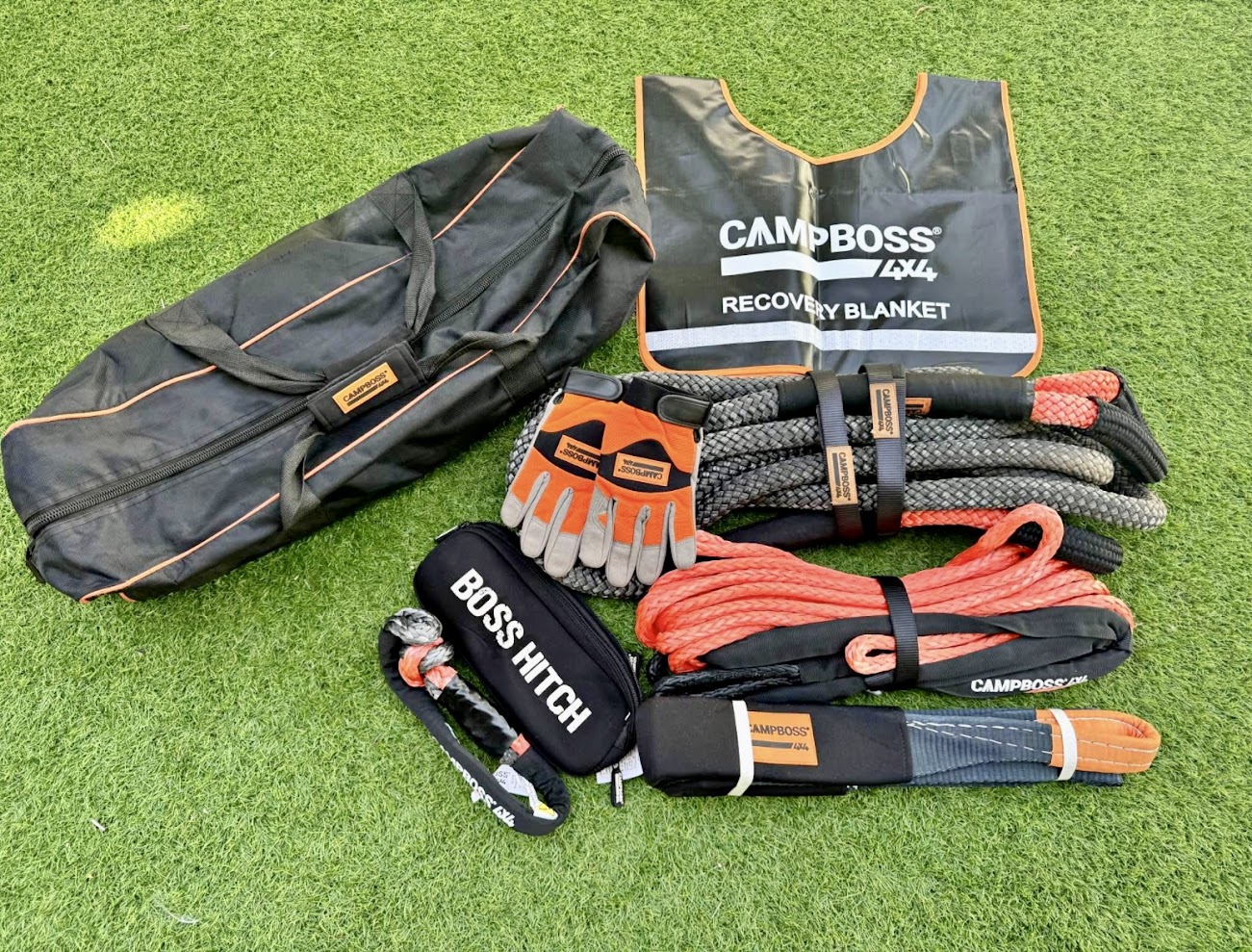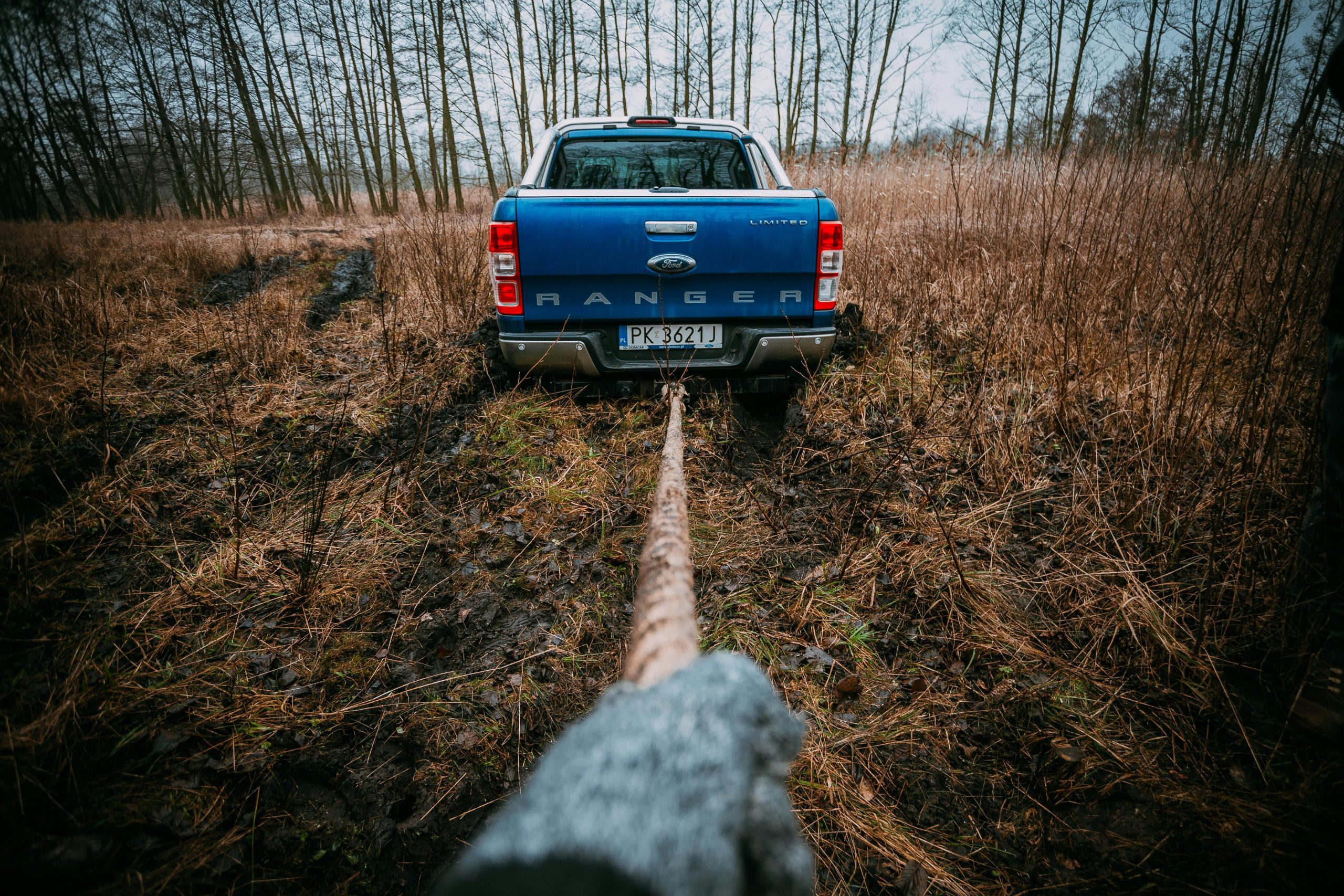
Every serious off-roader knows that a successful recovery isn’t about brute force; it’s about preparation and science. While having a high-quality recovery kit is great, that gear is only as safe as your understanding of its limits. The most critical number you need to know for any piece of recovery equipment—be it a rope, strap, or shackle—is the Minimum Breaking Strength (MBS).
The good
- Do check MBS on all gear
- Do use a minimum 3:1 safety factor
- Do inspect gear for cuts or fraying
- Do clean and dry gear after use
- Do verify your vehicle's GVM
The not-so-good
- Don't use knots in any strap/rope
- Don't use MBS as your WLL
- Don't drag gear on the ground
I’ve been out in situations where relying on a hunch instead of the numbers could have ended badly. Learning how to calculate minimum breaking strength is simple, but often overlooked. This guide will demystify the numbers, show you how to apply a safety factor, and ensure your next self-rescue or buddy-assist is completed without any drama. Let’s dig into the maths that keeps you and your vehicle safe.
what is minimum breaking strength
Minimum Breaking Strength, or MBS, is a measurement of the maximum static load a brand-new component—like a recovery rope or soft shackle—can handle before it physically fails. Manufacturers determine this value through controlled, destructive testing in a lab. They’ll pull the gear until it breaks, and the lowest recorded force is the MBS.
It’s crucial to understand that MBS is the theoretical maximum limit, not the force you should ever work with in the field. Recovery involves massive dynamic forces; a vehicle pulling a heavy load or a sudden snatch can multiply the static weight by factors of two, three, or even more. Therefore, MBS is just the starting point for determining your safe operating limit. We always use a Working Load Limit (WLL), which is derived from the MBS after applying a substantial safety factor. For instance, a kinetic rope might have an MBS of 14,000 kg, but its recommended WLL will be significantly lower, ensuring a large safety buffer.
calculating minimum breaking strength (MBS)
| Component | Minimum Breaking Strength (MBS) | Recommended Safety Factor (SF) | Maximum Safe Working Load (WLL) |
|---|---|---|---|
| Recovery Rope/Strap | 14,000 kg | 4:1 | 3,500 kg |
| Soft Shackle | 18,000 kg | 4:1 | 4,500 kg |
| Tree Protector | 10,000 kg | 5:1 | 2,000 kg |
How to use it
Applying MBS knowledge starts with understanding the equation for your safe working load. To determine your safe Working Load Limit (WLL), you need two things: the item’s MBS and the Safety Factor (SF). The simple formula is:
Working Load Limit (WLL) = Minimum Breaking Strength (MBS) / Safety Factor (SF)
In the recovery world, the Safety Factor is often recommended to be a minimum of 3:1 to 5:1 for dynamic recoveries, meaning the MBS must be 3 to 5 times greater than the load you are attempting to pull.
For example, if your vehicle has a Gross Vehicle Mass (GVM) of 3,000 kg, and you select a conservative safety factor of 4:1, the MBS of your primary recovery line should be at least: 3,000 kg × 4 = 12,000 kg
This is why quality kinetic ropes have an MBS of 14,000 kg or more, it gives you that required safety margin. Always check the MBS for the weakest component in your recovery system. If your rope is 14,000 kg but your anchor point or shackle is only 10,000 kg, the safe limit for that entire recovery setup is 10,000 kg.
What to keep in mind
Once you know how to calculate minimum breaking strength and apply the safety factor, there are several environmental factors that immediately reduce your gear’s MBS. Firstly, abrasion and cuts are your worst enemy. A small nick or tear from dragging a rope across a sharp rock can significantly compromise the entire structure, often without visible damage until it’s too late. Always inspect your gear meticulously before and after use.
Secondly, knots are a huge factor. Never tie a knot in a recovery rope or strap, as a simple knot can reduce the MBS by up to 50%! Use approved soft shackles or metal shackles designed for the task. Additionally, extreme temperatures can play a role. While high-quality gear is designed to withstand normal outdoor conditions, constant exposure to intense UV rays or storage in an extremely hot environment (like the roof of a vehicle in 40°C heat) can lead to material degradation over time, quietly chipping away at the MBS. Always store your gear clean, dry, and away from direct sunlight. Finally, remember that moisture and mud can carry sharp grit and act as an abrasive paste inside the rope fibres, accelerating wear. Cleaning your gear immediately after a muddy recovery is not just about keeping things neat; it’s a vital part of maintaining the original MBS and ensuring safety.
Summary
Understanding how to calculate minimum breaking strength is non-negotiable for safe four-wheel driving. We established that MBS is the ultimate breaking point, determined in a lab, and is not your safe working load. Instead, you must apply a substantial safety factor (a 4:1 or 5:1 ratio is highly recommended for dynamic recovery) to determine your Working Load Limit (WLL). This WLL is the only number you should ever operate near.
Always remember that the entire recovery system is only as strong as its weakest link. If you’re using a 16,000 kg rope with a 10,000 kg tree protector, the maximum safe load for that setup is based on the 10,000 kg component. This is why investing in a complete, matched recovery kit is often the smartest approach. By focusing on the WLL derived from the MBS, maintaining your gear, and selecting the right components for your vehicle’s weight, you drastically reduce the risk of equipment failure, injury, or damage. Stay safe out there and drive prepared!