Every time I meet a new four wheel drive owner, the question of tyre pressure comes up. It’s an absolute rabbit hole of opinions and conflicting advice, but getting it right is fundamental to having a safe, enjoyable, and successful trip. Having the correct tyre pressure is what connects your vehicle to the track, dictates how your suspension feels, and determines whether you float over soft sand or dig straight into it.
The good
- Do check pressure when tyres are cold
- Do use a quality pressure gauge
- Do adjust PSI for heavy loads
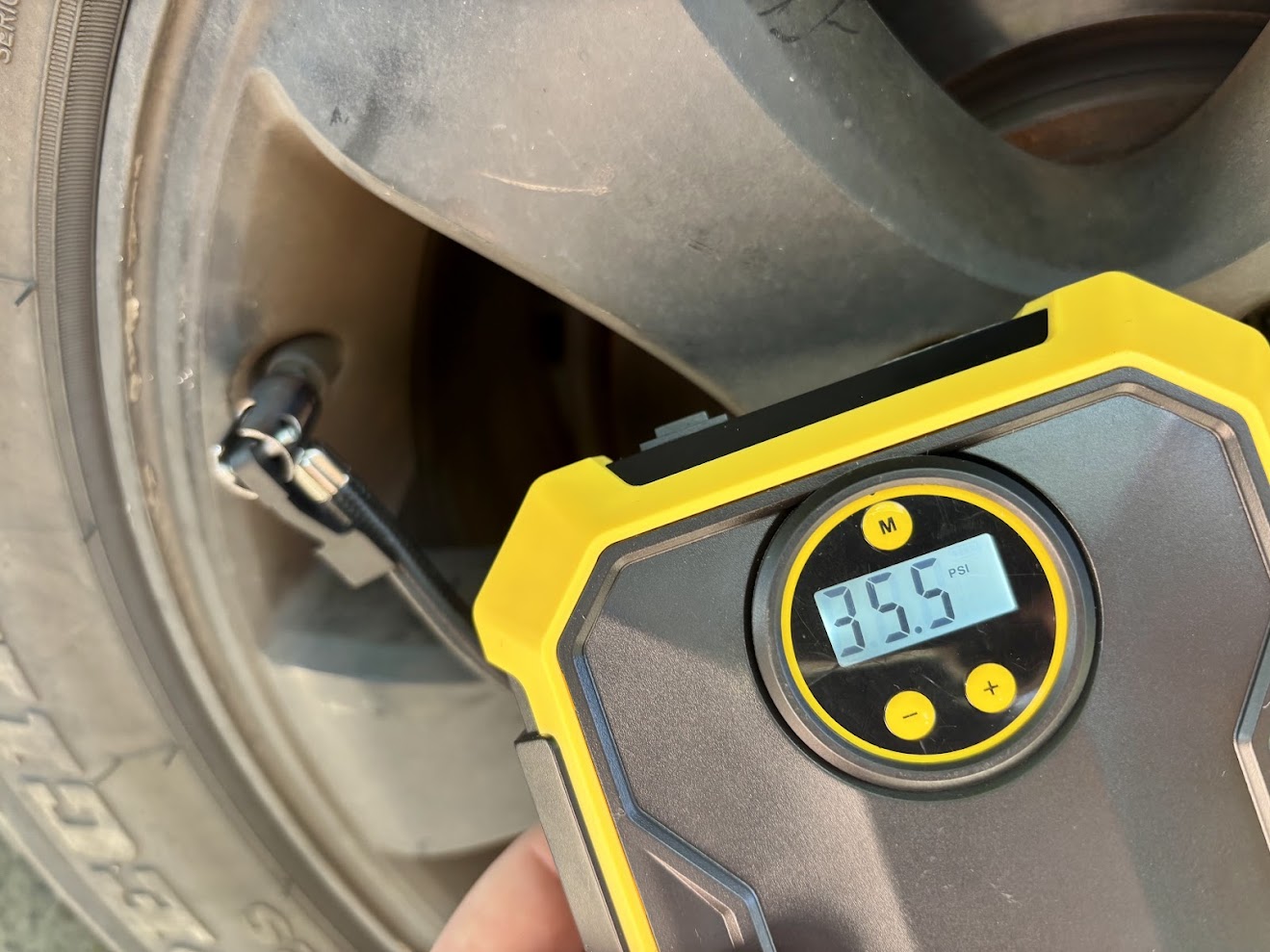
- Do carry a reliable compressor
- Do re-inflate for bitumen roads
The not-so-good
- Don't use one PSI for all terrain
- Don't drop below 12 PSI
- Don't drive fast on low pressures
Our picks

So, what psi should 4wd car tyres be? There isn’t one magic number, but rather a range of pressures tailored to your load and the terrain. We’ll first look at your highway baseline, which is your anchor point for all other adjustments. Then, we’ll break down the practical applications for lowering that pressure when you hit the dirt. Mastering this simple skill will reduce your wear and tear, save you fuel, and drastically increase your comfort, especially on long corrugated roads.
what is PSI
PSI stands for “Pounds per Square Inch” and it’s a simple measurement of air pressure inside your tyre. This pressure is what carries the entire weight of your vehicle. The air pressure determines the shape of the tyre’s contact patch, the small area that grips the ground. When you increase the PSI, the tyre bulges less, the contact patch becomes smaller and firmer, and the tyre rolls with less friction. This is great for fuel economy and stability on paved roads.
However, when you decrease the PSI, the tyre’s sidewall flexes out, spreading the weight over a much larger and longer contact patch. This wider footprint is vital off road. On sand, it allows your vehicle to “float” across the surface instead of cutting into it. Over rocks, the lower pressure allows the tyre to deform and wrap around obstacles, dramatically improving grip and acting as a mini shock absorber. Getting this balance right for your vehicle’s weight and speed is the key to tyre longevity and off road safety. Always remember that the tyre pressure stated on the compliance plate inside your car door is only the minimum for carrying the maximum possible load on the road, it’s not the ideal PSI for every situation.
How to find the right PSI
Your journey to finding what PSI your 4WD car tyres should be begins with setting your perfect Highway Pressure. This must be done when your tyres are “cold” (driven less than 2 km). A good starting point is usually 32 PSI to 40 PSI, but here’s a simple test I use:
Set the Cold Pressure: Inflate all four tyres to the manufacturer’s maximum recommended pressure on the tyre placard (often 36 PSI to 40 PSI) or your desired starting point.
Drive and Test: Drive for at least an hour on the highway at a constant speed.
Check the Hot Pressure: Immediately pull over and check the pressures again.
The 4 PSI Rule: Your hot running pressure should be about 4 PSI higher than your cold starting pressure. If your tyre pressure has increased by 6 PSI or 8 PSI, your starting pressure was too low and the tyres were overheating from excessive flexing. If it only increased by 2 PSI, your starting pressure was too high and you were losing grip and comfort. Adjust your cold PSI until that 4 PSI increase is achieved. This adjusted figure becomes your reliable, loaded Highway PSI.
What to keep in mind on different terrains
Once you have your loaded Highway PSI, dropping the pressure for off-road tracks becomes straightforward. This is where the magic happens, but you must respect the terrain and the speed limits.
| Terrain | Recommended Starting PSI (Approximate) | Purpose of Pressure | Max Speed (Approximate) |
|---|---|---|---|
| Highway | 32 PSI to 40 PSI | Stability and Fuel Economy | 100 km/h |
| Gravel/Corrugations | 25 PSI to 30 PSI | Comfort and Reduced Puncture Risk | 60 km/h |
| Rocky Tracks | 20 PSI to 25 PSI | Increased Grip and Protection from Impact | 25 km/h |
| Soft Sand/Mud | 14 PSI to 20 PSI | Maximize Flotation and Contact Patch | 20 km/h |
What to keep in mind
For Sand: Start at 18 PSI and only drop further (down to 12 PSI to 14 PSI) if you are struggling badly. The lower you go, the slower you must drive to prevent the tyre from separating from the rim or overheating the sidewalls.
For Rocks:20 PSI to 25 PSI is a great middle ground. This allows the tyre to flex over sharp edges without putting too much strain on the sidewall, which reduces your risk of a puncture.
For Mud: Pressure is used less for flotation and more for cleaning the tread pattern. 20 PSI to 25 PSI is common, but it depends heavily on the mud’s depth and consistency. Always re-inflate back to your Highway PSI before hitting high speeds, even if it’s just for a short distance!
Summary
The bottom line is that your tyre pressure is never static; it’s a dynamic setting that must change depending on the road surface and your vehicle’s load. Your first job is finding your loaded Highway PSI using the 4 PSI Rule to ensure safe, stable on-road travel without overheating your tyres. This figure then becomes your reference point.
When you hit the dirt, the goal is always to increase the tyre’s footprint and comfort. Gravel roads benefit from a slight drop, around 28 PSI, to absorb vibrations. For serious off-roading like sand or technical rock crawling, dropping down to 18 PSI or 20 PSI becomes necessary to spread the vehicle’s weight and allow the tyre to grip the terrain.
The golden rule is that the lower the pressure, the slower your speed must be. Never exceed 40/50 km/h on very low pressures. By actively managing your tyre pressures, you’re not just preventing getting stuck; you’re actively looking after your expensive tyres and ensuring a smoother ride.